Left-hand side, one-lane bridges, slow roads and strong sun — the honest driving briefing, plus what to check on a rental agreement.
Most of our travellers drive at least part of their trip, and most of them say the same thing afterwards: it was easier than they feared and slower than they planned. Here's the briefing we give before anyone picks up keys.
The basics
- Drive on the left. Same as the UK, India, Australia, Japan and South Africa. If you're from the US, the Gulf or Europe, give yourself an hour of quiet roads before any city driving.
- Speed limits are 100 km/h on open roads and 50 km/h in towns, and they're enforced. On most scenic roads you'll average 60–70 km/h regardless.
- One-lane bridges are common outside the cities. A sign tells you who gives way; if the big red arrow points at you, stop and wait.
- Roundabouts: give way to traffic already on them, and to anything coming from your right.
- Seatbelts for everyone, always. Car seats are compulsory for children under seven.
- Phones: hands-free only. Fines are steep.
Distances lie
New Zealand looks small and drives long. Christchurch to Queenstown is 480 km and takes six hours without stops — and you'll want stops. Our rule: no more than four hours of driving on any day, none on the day you land, and every drive time on your itinerary is real, not from a map app.
Weather and roads
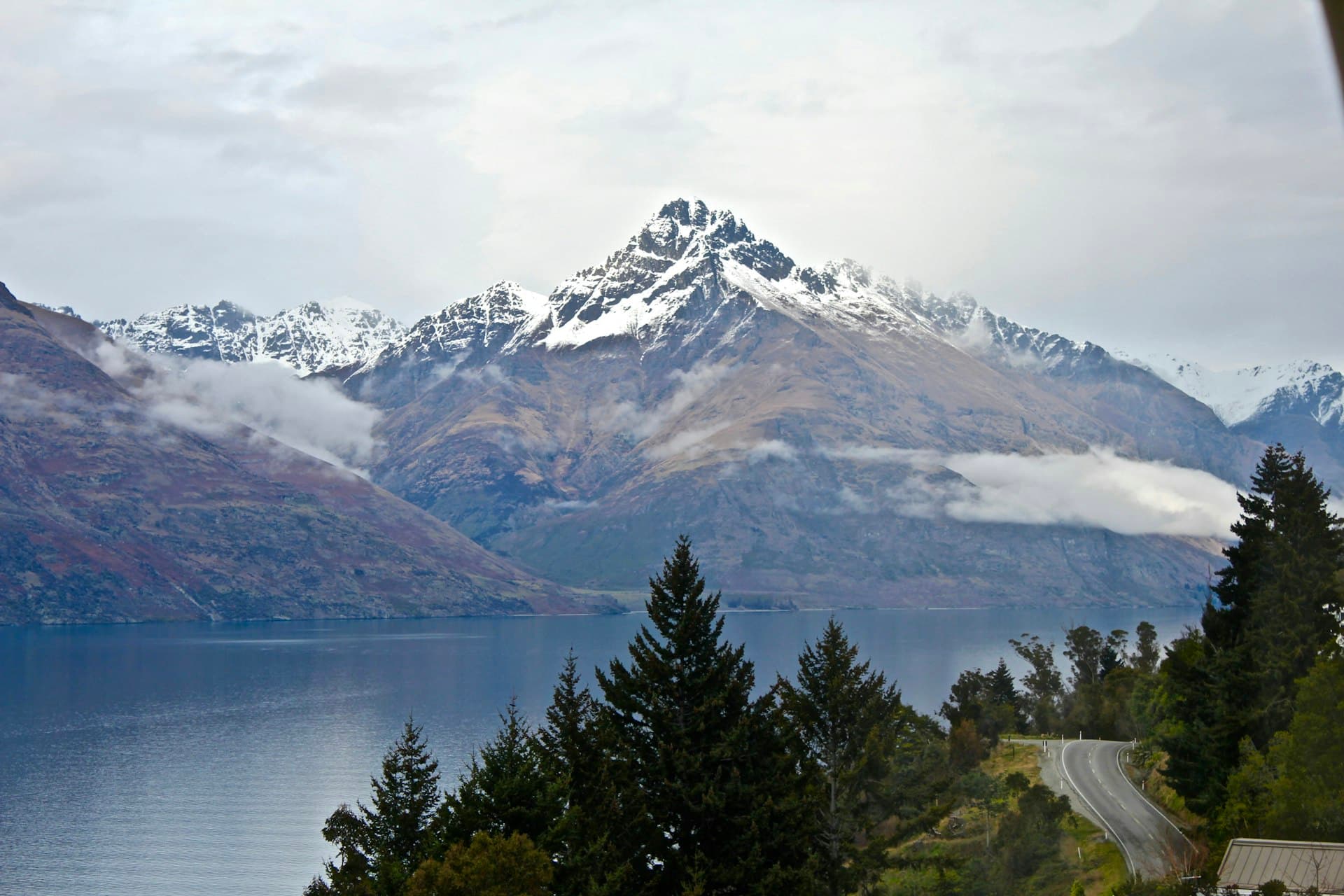
Alpine passes (Arthur's, Lindis, Crown Range, the Milford road) can close in snow between June and October; chains are sometimes mandatory and rental companies will tell you. Gravel roads are fine in a normal car but check your rental agreement — some exclude them. The sun is strong; sunglasses are a driving tool here.
What to check on the rental agreement
- Insurance excess. The default excess is often NZ$3,000–5,000. Reducing it to zero costs more per day and is usually worth it.
- Windscreen and tyres are often excluded from the standard cover.
- One-way fees between islands and between Auckland and Queenstown.
- The ferry: most companies make you drop the car in Wellington and pick up another in Picton rather than take it across — it's easier than it sounds.
- Licence: an English-language licence is accepted for up to 12 months; otherwise carry an international driving permit as well.
Or don't drive
Nothing wrong with a private driver-guide, especially for families and the mountain roads. Many of our trips mix both — read Self-drive, private driver or small group.
Ready when you are